Sunday, 6 June 2010

Marmora's Warbler good, Forest of Dean better.

My first reaction on hearing the news of a Marmora's warbler in Blaenavon, Gwent was: "What's a Marmora's warbler?" Oops. Showing my ignorance again. The next question was: Should I go for it? The first day news was a bit dodgy. 'Probable', 'mobile' and 'elusive' are not words you want to hear when contemplating a 165 mile journey to see a bird. The second day reports were more encouraging so I decided to go yesterday, Sat 5 June.

I left early and arrived easily and found the car park (that lonely road on the moor is actually in Google street view). There were probably 200-300 people there already. No sooner had I got to the spot than the bird emerged unexpectedly from a bush at the side of the road and flew in front of my face a couple of metres away! It was a while before it reappeared so, in the meantime, I enjoyed the other birds. There were several cuckoos, one being mobbed by tree pipits (both year ticks), willow warbler, meadow pipits, whinchat, etc.


Tree pipit


Cuckoo


After twenty minutes, the Marmora's warbler reappeared causing a surge. It favoured a wall on the North of the road which was good from the point of view of light. I managed shots from about 100m and the bird is small. Nevertheless, you can clearly make out the Dartford warbler look, the orange legs, red eye, black tip to bill and plain breast. It was singing away most of the time. Lovely.


Marmora's
warbler


Marmora's
warbler.


Marmora's warblers normally live on Mediterranean islands such as Corsica and Sardinia. The last record in the UK was about ten years ago. After about an hour it was still only nine o'clock. I spoke to some guys from Essex who told me the Forest of Dean was very nice, especially for goshawks displaying in the Spring. It was too late for that but it was on my way home so I went to have a look. I was sure to be able to get a drink at the RSPB visitor centre!

On arrival at the Nag's Head, sorry I mean Nagshead RSPB, the visitor centre was very spartan with no facilities at all except for toilets. They had solar panels for electricity but they were not working so there were no lights. The volunteers were very helpful and, hearing that I'd been up since 5 o'clock, they gave me a coffee from their own personal flask. Thanks very much to the Harrisons (I think they were so called). That was very kind. I was gasping.

The Forest of Dean is gorgeous. It's a large area of mature woodland, ideal for pied flycatcher and wood warbler. On my way to the lower hide I heard a family of treecreepers. They were very mobile and light levels (photographically speaking) were very low in the wood. I had to up the ISO to 1600 most of the time and this does affect the quality of the photos. I know some people say modern cameras are good to 1600 and even to 3200 but I notice a distinct graininess even over 400.


Treecreeper


The hide was a very old fashioned one from 1986 with very narrow slits only about 180mm high. I had a job looking out and I only just managed to get my lens through the opening. There was a nice spotted flycatcher nearby and a nuthatch also came to the same tree.


Spotted
flycatcher


Even though I applied -1.3 stops of exposure compensation, the pale bird in sunlight is still overexposed. -2 would probably have been right for a small pale bird with the dark trees around.

I then had to find a pied flycathcer and wood warbler. According to the volunteer, pied flycatcher should be relatively common in the wood. It was simply a case of finding a nesting box with them in it. Returning birdwatchers, however, reported that all the nesting boxes seemed to be occupied by tits. I found a point where I could watch three nesting boxes at the same time. The middle one did have pied flycatchers in. The guys from Essex appeared at that moment and so did the wood warbler which proved to be very mobile and elusive.


Pied flycatcher.
male.


Pied flycatcher.
female.


Wood warbler.


On my way home I stopped off at Highnam Wood to see if there were any nightingales. The nature trail was good, but I found no nightingales. I met the Harrisons again, checking nesting boxes. They'd finished their shift at Nagshead and they'd been to a wedding in between!! That's efficient use of time.

Time to go home and look at the photos.

Friday, 4 June 2010

Devon and Cornwall for Gilbert and Sullivan.

I had high hopes for this weekend. Not only was I going to see my sister sing in G&S's Ruddigore but I could spend a whole day going down to Devon. I had high hopes of seeing cirl bunting at Labrador Bay, just South of Teignmouth. After a gorgeous day on Thursday 13 May, the Friday turned out to be awful in the West. It rained most of the day and I only heard the cirl buntings. I don't blame them for not coming out to show for me. I wouldn't have come out either!

Well, dippers aren't afraid of rain are they? I knew there were dippers at Aveton Gifford in South Devon. I just couldn't find the right spot on the map. After that, I went for a coffee and cake in the local shop; comfort eating!

Well, the next day was lovely so I thought I'd head for Cornwall where quite a number of useful birds had been sighted. I left early for the Camel estuary for 3 spoonbills and a lesser yellowlegs, a rare wader from America. Got there quite early and went down to the flats only to be greeted by thick mist. Before it cleared a fox came along the path towards me, stopped briefly, before carrying on straight towards me. He looked me up and down, then passed within two metres of me on his way somewhere. He did have a rather opaque looking eye so maybe his sight was bad.


Fox with dodgy right eye!


  I made out a heron in the mist


.


Heron.


The mist cleared half an hour later but I was clearly in the wrong place. Further up the river I met someone from Cornwall Birdwatching and Preservation Society who very kindly told me the spoonbills were at their private sanctuary but the yellowlegs had gone. He said he was sure the others wouldn't mind if I had alook from their hide, and they didn't. Just that the spoonbills had flown a few minutes before I got to the very impressive new tower hide (thanks very much guys, much appreciated).

Ah, well. There was still the woodchat shrike at Polgigga, near Lands End. I was halfway there already! Cormwall is surprisingly difficult to get about in. It took nearly one and a half hours to get there. The instructions on the pager were unusually accurate. I got straight to the spot to find another birdwatcher, David Bradford, already there and not having seen it. It didn't show up in the next ten minutes and we judged it too near the middle of the day. I wanted to see the choughs at Lands End and it turned out that David had had a hot tip on where to see them. "Lead on" I said.

We went to one of the valleys by the airport. I had been there once before and I had seen a chough fly over last year. We followed the coast path round and saw some charming stonechats on the gorse. The yellow backdrop of the gorse made the stonechats stand out in a lovely way. I spent some time taking pictures.


 Stonechat - male


In scanning the cliffs I saw a buzzard fly to it's nest and closer inspection with the scope showed two chicks.


Buzzard on nest with chicks


David decided to call it a day. He left wondering if he'd see from my blog that the choughs came after he left! I continued with the stonechats for a while and then decided to go to Cot Valley, the next valley over from where I was. This is quite hard to get to because you have to go through St Just where the lure of the fish and chip shop proved too much. With full stomach I pressed on. At the bottom of Cot Valley I walked along the coast path towards where I had just been. I met Peter Tonkin. He was also looking for choughs and had his camera ready. Two choughs flew to the top of the cliff above our heads and out of our sight. We pressed on and after ten minutes two choughs came very close. One went into an old mineshaft. The other posed for us on the edge for 30-40 seconds, long enough to get good views. It was, I think, the closest either of us had been to a chough. Very nice.


 Chough, Land's End


It was getting late and the satnav showed over two hours to get back to Plymouth. I decided not to look for shags as I would surely see them in July when I would be back in Cornwall.

The light opera was very enjoyable, despite their selling out of ice-cream very quickly.

On Sunday, after lunch, my sister came with me to Plymbridge Woods for a walk to see the peregrines. They had young in the nest. We talked to the volunteer. The dipper hadn't been seen that day. While we were talking I kept an eye on the river and suddenly the dipper was there!! Great! Gill, my sister, was chuffed at seeing nuthatch, great spotted woodpecker and a grey wagtail that also appeared over the river.

I left after breakfast on Monday and decided to visit Labrador Bay again to see if the cirl buntings would come out to play. A couple of hundred metres from the car park I saw a chap with binoculars and I stopped to ask him if he had seen any cirl buntings. "I'm doing a survey of cirl buntings" he said! There were some in the hedges along the main road, but he advised me to look from the carpark. It was good advice. I went down the ridiculously steep field and immediately saw a female. I couldn't take any photos though, coz I'd left my tripod in the car! I had to walk up the steep field again to get it.


Cirl bunting, male.
Labrador Bay, Devon


As I wasn't a million miles away from Dawlish Warren I decided to go there and see what was about. It was quite a hot day and I had forgotten how tiring it is to walk through soft sand. At the far end of the spit I saw a group of whimbrel. I managed to get fairly close before they flew off.


 Whimbrel


Whimbrel


There was a small flock of dunlin too, almost unnoticeable on the edge of the water.

They just looked like pebbles.


Dunlin


That was the highlight of the afternoon apart from a few common whitethroats, greenfinches, goldfinches, and mainly herring gulls. There were a few shags / cormorants on a distant sandbank but they were far too far away to be sure what they were.

At home I was pleased about the choughs, the dipper, cirl buntings and the whimbrel. Wonder what my year list would be like if I saw, say 90% of the birds I hoped to see!!

Wednesday, 19 May 2010

Elusive red-rumped swallows. I hate 'em!

Two trips to Arlington Reservoir in East Sussex trying to see the red-rumped swallows led to nothing. The first time on Monday  I arrived too late in the day. The second time I got there at 0700 when the mist was down and it took an hour or so for the sun to burn it off. There was no red-rumped swallow but there were some ordinary (barn) swallows. This one was skimming the surface.


swallow.


Some linnets also came by. This one was wary. I manged a single shot before it was off like a shot!


Linnett


There was compensation for not seeing the red-rumped swallows in the form of a very obliging Temmincks stint. I followed it for a while. It was remarkably tame and did not scare easily. Lovely bird.


Temminck's stint

Thursday, 13 May 2010

Wood sandpipers are handsome birds. Crossness Nature Reserve, London.

On Sunday I went to Crossness Nature Reserve in South East London where some wood sandpipers had been seen. At first it was difficult to know where they were. I am a member but I couldn't get into the reserve itself as my code for the gate didn't seem to work.

Then I met someone who showed me where they should be. We both scanned the flooded paddock but could see no wood sandpipers. The pager reported them at 0800 and it was now 0845! What?? I reported that there was no sign. A lady walking her dog also scanned the field with me but there was nothing to be seen. Then, a flock of 8 small waders flew overhead and away into the distance. They'd been there all the time!

I waited around taking pictures of a distant wheatear and black redstart. Then the wood sandpipers came back and, of course, went into the most remote and inaccessible corner of the field. We watched them through scopes for a while and people then dispersed. I decided to ask the owner of a nearby field if I could go into the far corner for a better view. He was friendly and said I could go wherever I wanted. I managed to approach without disturbing the birds and got to within 25m.


Wood sandpiper.


That was the high point of the day. I went home to join Lynne for lunch in a pub (Lynne was doing a charity walk) and then headed off to Arlington reservoir hoping to see red-rumped swallows. No such luck! They'd gawn!

A chiffchaff like any other (almost)

When is an ordinary chiffchaff not an ordinary chiffchaff? Well, when it's an Iberian chiffchaff, of course. Blowed if I could see much difference but there it was and I took it's picture. It's hard to get too excited about a chiffchaff but it is a new lifer and a year tick too. It was rather wet when I went so I borrowed Lynne's umbrella with the flashing LEDs to cheer up the birds. The poor chiffchaff looks quite bedraggled. It's a good job it was so obliging and came out to sing instead of hiding from the rain.


Iberian chiffchaff, Kent


After that, I went on to Dungeness RSPB and was lucky to see the purple heron briefly as it flew.

Tuesday, 13 April 2010

Pulborough in bloom. Spring is (almost) here!

On Monday I left early to visit a local place near Oxted hoping to see a ring ouzel. It was a nice walk but no ring ouzel. This is my bogey bird at the moment.

I then went to Pulborough hoping to see the common crane which had been there for a couple of days. On arrival I raced down to Jupps viewpoint but there was no crane. Twitching is no fun when you miss all the birds!! Shortly after, a man came from the other viewpoint and said the crane had flown at 10.05 and I had arrived at 10.10! Grrrrr!

To compensate, there were two snow geese, a life tick for me after my signal failure to see this bird in Norfolk. When I came back later they were closer to me and promptly mated!! Well, it is Spring.


Snow geese.


Although cold, there were sunny intervals and some of the bushes on the reserve were in bloom. This allowed me to spend some time relaxing with the great tits, which were nibbling the buds out of the blossom. They look very nice with a floral background.


Great tit.


I also found a number of blackcaps. I got a nice view of a male, but the females were keeping a low profile, probably building nests and being homely.


Blackcap, male.


This bold chiffchaff was collecting nesting material.....


Chiffchaff.
(shorter wings,
darker legs)


....and this willow warbler was very actively staking out his territory in song. Magic!


Willow warbler.
(Longer wings,
paler legs)


If these two birds look almost identical it's because they are, almost identical. Telling them apart by song is easy. However, other features are the length of the wings and the leg colour. The wings of the chiffchaff are generally shorter. You can see from the pictures above that the wings of the willow warbler extend further back than the chiffchaff. Also, the legs of the chiffchaff are darker than those of a willow warbler.
The crane didn't reappear that afternoon, but I didn't mind after the lovely birds I'd seen.

Close encounter with grasshopper warbler.

On Friday, 9 April, I went with David to Rainham. We went first to Ingrebourne Valley where a grasshopper warbler had been seen the previous day. The instructions were not precise and we had to walk all over the reserve to find the spot.

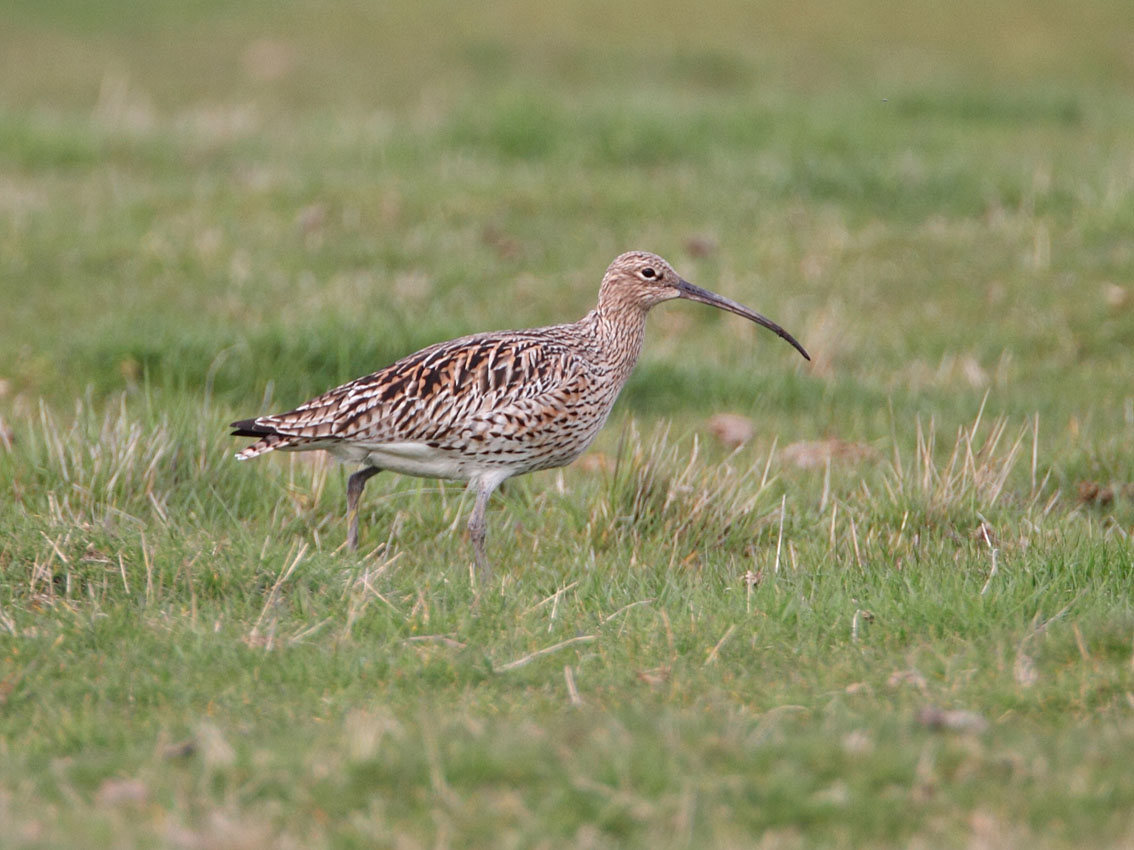
David found the bird which performed admirably for us, coming close and reeling from the middle of a nearby bush. It was very mobile however and neither of us managed to get a shot. This was a good start to a day which, on the whole, was rather disappointing. Nothing further of note was seen despite trips to Minster (didn't see ring ouzel) and Elmley marshes. At Elmley, however, the drive from the road to the car park was pleasant with views of about 100 curlews, a brown hare, several lapwings, redshank and other common birds. The Spring influx seems to be late this year.


Curlew.


Brown hare.
(David took this photo)

Tuesday, 6 April 2010

Hoopoe at Rainham. Alpine swift at Chafford Hundred.

This weekend wasn't one of the best weatherwise, admit it. I'd done nothing all weekend and on Easter Sunday my nine year-old niece was to be baptised at Rainham church. I duly put on my best bib and tucker. The service was nice and the lunch was relaxing. Afterwards, I took Lynne to see her other sister and I sloped off to Chafford Hundred, just on the other side of Lakeside to see if I could find the Alpine Swift that was reported late yesterday. I'd not been there before but I got to the right place at about 3.45 pm. and there was one other birdwatcher there. The swift, of course had just been there, but it had just disappeared! The chap told me that the others had just gone to Rainham because a hoopoe had been reported and Ranham closed at 5pm. We agreed it would be best to go to Rainham before it closed.

At 4.10 I arrived at Rainham. Through the telescope the staff showed me where the group watching the hoopoe was. It was about as far from the centre as you can imagine. For those of you who don't know Rainham that is about 3km or 1.5 miles. I didn't think I could get there and back by 5pm. She said "You can if you're quick!"

I raced off with a few others and we arrived, hot and bothered on the other side of the reserve. The group started moving off at that point. The hoopoe had just flown. Ohh, nooo!! It was quickly re-located on a wooden fence behind a metal fence. I soon got it in my scope and fired off a few shots.


Shy hoopoe.


It was a British tick for me. It was quite distant and I decided to go back for the swift straight away. I got back to the RSPB centre just before five.

No sooner had I arrived back at Chafford Hundred than the alpine swift reappeared. It was showing well but it took some time to get the focus right on my camera. Autofocus is useless with a small bird flying high and at speed. I prefocussed roughly and then followed it while I tweaked the focus ring before firing off a few frames. Some of them came out. Another British tick and a life tick too! There were also some sand martins and swallows about.


Alpine swift


I thought I'd better get back to Lynne, but I was pleased at two British ticks in a couple of hours.

David Campbell had rung to tell me of a ferruginous duck at Holmthorpe but I coudn't get back in time for it. I went this morning (Monday) but it wasn't there. I missed another British tick there.

A Ring-necked duck on a circular tour! Monday 29 March 2010

On Monday 29 March I planned a circular tour hoping to get up to my last year's total for the end of March, 145. I was on 144.

I started off at Aston Rowant NNR just off the M40 near Watlington, where a ring ouzel had been seen. I didn't see this potential lifer but I did see a nice female yellowhammer and of course some red kites. Watlington is the place for them. The red kite was year tick.


Female yellowhammer.


I moved on to Foxcote Reservoir for the ring-necked duck. Access was a little difficult via a public footpath which could only be accessed through a farmyard and the farmer wasn't too happy. He told me I should go to the hide 700m away. I asked if I could see the water from the public path and he told me I could but there were no rare birds there. I said I would just have a quick look. I quickly got onto the ring-necked duck on the far side of what was a fairly small reservoir. I got a very distant record shot and decided to move on as I had far to go.


Ring-necked duck.
Distant record shot.


Next stop was the RSPB headquarters at Sandy in Bedfordshire where a two bar crossbill had been around for a couple of days. I got there and it had been seen with a flock of about 40-50 common crossbills. I'd never seen so many crossbills but they proved elusive and, although a flock of about 20 flew in we couldn't see the two-bar. After about an hour I decided to move on but I then met a man who said the two-bar was showing well on the other side. The reserve isn't that big so I raced around but the bird had just flown. Then the flock came into a distant but bare tree and after a little scanning, I made out the two-bar crossbill. A nice year tick.


It was getting late. Although it was a two hour drive, I decided to go for the lesser kestrel at Minsmere RSPB, where Nick, local birder, had already been this morning and seen it. About half an hour into the jouney, it started to rain and it didn't stop. It was raining when I arrived and the lesser kestrel hadn't been since it had started to rain at about 3pm. I stayed only 10 minutes. After checking the forecast was rain for the rest of the day, I decided to call it a day and go home. With the red kite, ring-necked duck and two-bar crossbill I ended March on 147.

Monday, 5 April 2010

Springtime at Painshill

Last week I went with Tricia to Painshill Park hoping to see a kingfisher. Spring was in the air with most birds dancing and making eyes at their partners or prospective partners. We didn't see a kingfisher where Tricia had seen them before but we did see two mute swans mating. The poor female was pushed right under until the male chivalrously pulled her head above water with his bill!!


Hold still dear, this won't take a minute!!


We also saw two nuthatches inspecting a very tasty and promising hole in a tree with a 'to let' sign outside. It looked as though they were going to take it.


Nuthatch.  Let's see how much room there is in here.


The terrapin was out enjoying the odd sunny interval as we were.


I love the sunlight. Terrapin.


After most of a circuit we repaired to the tea room for lunch and to warm up. The rain had mainly kept off during the morning. after lunch we went back to the river where a tree creeper flashed silently to a nearby tree on the far bank. Then Tricia saw the tuquoise flash of a kinfisher and we watched it disappear round the bend of the river. Well, at least we saw it. Thanks, Tricia for showing me round.