Day 3. Thursday, 24 March, 2011
Next to our hotel was Shulamit Park, a magnet for migrants. On other days, several of the others had gone birdwatching even before breakfast. I decided to go as well today. The park is planted with many trees, and the lawns are watered every day. At the top of the central mound, where the winos sleep, there is a very attractive bottlebrush tree which attracted most of the migrants. Wryneck, eastern olivaceous warbler, eastern Bonelli's warbler, blackcaps, lesser whitethroats and Spanish sparrows were all in evidence. However, I was not in the park. A small heron had been seen in the marina and I got up before 6 AM to see it before it flew away. I saw it only briefly and distantly and against the light of the rising sun. It was a striated heron.
After breakfast we left at 7:45 AM as usual and drove to kilometre 33 to look for Dunn's lark. On arrival at this desert site there was a solitary car. Nearby, a photographer had set up a hide and a small battery driven water fountain to attract the birds. I wondered what he thought of 16 birdwatchers suddenly descending on his remote watchpoint! In the event, we only saw desert larks, a bar tailed lark, a woodchat shrike and a flyover short-toed eagle. We also flushed a large Cape hare, which bounded off into the distance.
 |
| Bar-tailed lark |
 |
| Cape hare |
We moved on to Yot Vata. On a nearby site of acacia forest we hoped to find Arabian warbler, one of the "big five" most wanted birds. Arabian warbler is a very localised bird, but it is resident and sedentary. At first we saw eastern Bonelli's warbler, hoopoe, a couple of very nice blackstarts, etc before the Arabian warbler eventually appeared and showed well for several minutes. We also saw a scrub warbler and a gecko, and some people saw a couple of sand partridges in the distance. Flyovers included a black stork and booted Eagle.
 |
| Arabian warbler |
 |
| Geckoey thing |
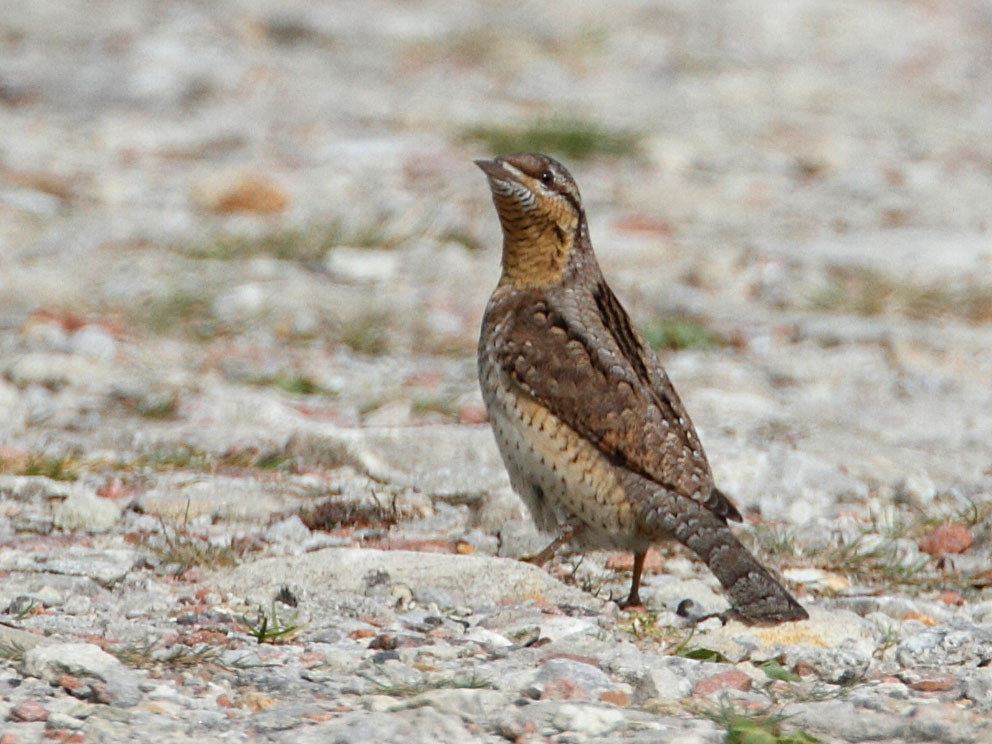
Next stop was the Yot Vata sewage ponds where we found our first cattle egrets, reed warbler, squacco heron, woodchat shrike and, further on, citrine wagtail and Dead Sea Sparrows. A little further on we heard our first turtle dove and a masked shrike performed for several minutes nearby. On the way back an amazingly confiding wryneck performed on the path in front of us.
 |
| Masked shrike |
 |
| Black-eared wheatear |
 |
| Wryneck |
It was only a short hop to the cafe at Yot Vata where we had lunch, followed, for me, by the now traditional large ice cream! As it was fairly warm, we went up into the mountains to the Shizzafon sewage ponds. These were sewage ponds with a difference! There wasn't much water and the ponds were landscaped with attractive vegetation, bushes, reeds, etc. Here we enjoyed squacco herons, linnet, bluethroat, citrine wagtail, Northern wheatear and a solitary white stork.
 |
| Citrine wagtail |
 |
| Black-winged stilt |
 |
| Northern wheatear |
 |
| White stork |
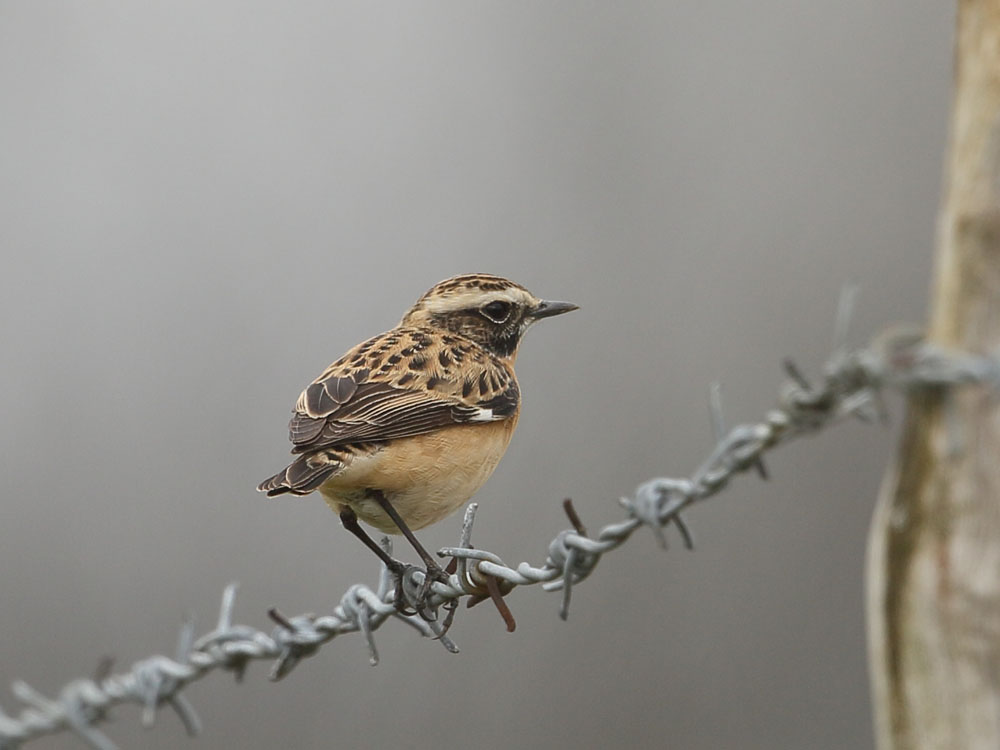
Having found no hooded wheatears we made our way back to the fields at Yot Vata. This yielded several firsts for me including a small number of Cretzschmar's bunting, an ortolan bunting, large numbers of white wagtails, greater short-toed larks, bimaculated larks, desert wheatears and yellow wagtails. There were also smaller numbers of red-throated pipits, water pipits, Siberian stonechat, woodchat shrike, masked shrike, and kestrel. One kestrel caught a quail and proceeded to eat it on a roll of straw in full view! Finally, a couple of tawny pipits were another first for me. A fitting end to another good day!
 |
| Cretzschmar's bunting |
 |
| Desert wheatear |
 |
| Ortolan bunting |
 |
| Tawney pipit |
 |
| Kestrel with quail (alive when we first saw it)!! |